
Research agenda

Applied poultry intelligence: sensing, interpretation, and action.

MINA FARMS is shaping a research agenda around precision poultry systems that combine computer vision, IoT sensors, environmental modeling, AI agents, and practical operator workflows.

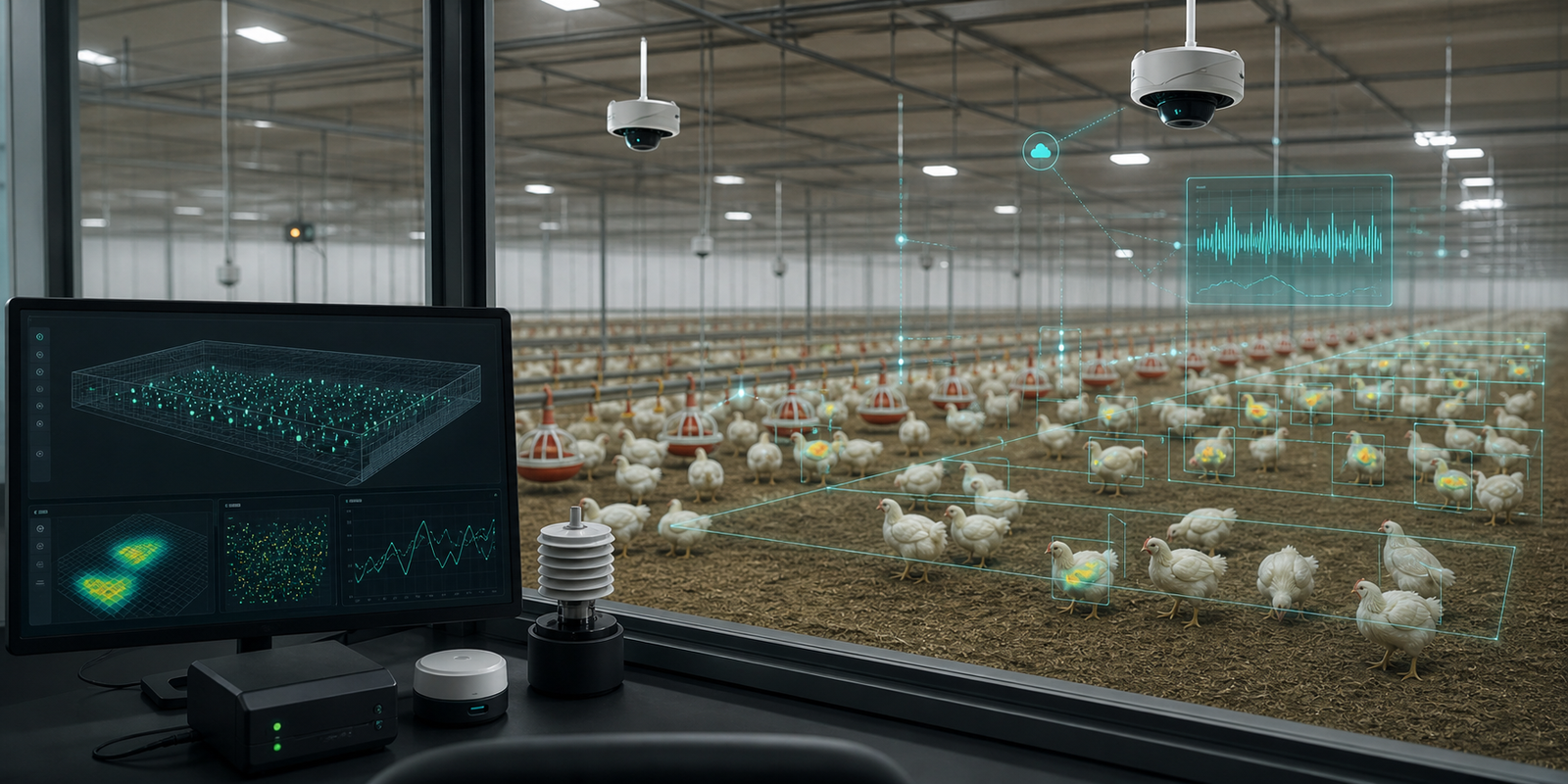
Computer vision and sensor fusion in a poultry house

Research philosophy

Research should become field intelligence, not shelfware.

Poultry research becomes valuable when it moves from observation to decision support. A model that detects a pattern is useful only if the signal is reliable, timely, explainable, and connected to a workflow that a producer or manager can actually use.

MINA FARMS wants to collaborate on research that can become prototypes, pilots, and eventually commercial tools for poultry operations.

Flock Health Intelligence

Research direction: combine behavior patterns, activity levels, sound signals, feed/water indicators, mortality cues, and production records to identify early signs of stress or abnormal flock development.

Potential outcome: early-warning models and operator alerts that help teams investigate issues before they become visible production losses.
Computer Vision & Spatial Awareness

Research direction: use camera systems and vision models to understand distribution, clustering, movement, equipment interaction, floor coverage, and behavior changes across the house.

Potential outcome: visual intelligence that highlights where attention is needed, instead of asking a person to watch hours of footage or walk the same pattern blindly.

Environmental Optimization

Research direction: connect ventilation, temperature, humidity, litter conditions, air quality proxies, energy use, weather context, and equipment status into a more complete model of house performance.

Potential outcome: decision support for comfort, consistency, and energy-aware management across growout cycles.

Autonomous Farm Agents

Research direction: design agentic AI workflows that summarize daily status, monitor thresholds, ask clarifying questions, prepare handoff notes, and recommend next checks while keeping the human operator in control.

Potential outcome: a practical farm copilot that turns scattered signals into concise operating guidance.

Operational Memory Systems

Research direction: turn daily notes, events, interventions, flock performance, equipment issues, and management decisions into structured, searchable memory across production cycles.

Potential outcome: better learning from past cycles, easier manager review, and stronger documentation for continuous improvement.

Biosecurity & Risk Workflows

Research direction: explore how digital checklists, anomaly reporting, visitor/equipment logs, and risk signals can support stronger biosecurity habits without adding unnecessary administrative burden.

Potential outcome: practical workflows that improve consistency, accountability, and response readiness.

Collaboration model

MINA FARMS can help structure research into buildable workstreams.

A strong collaboration starts by defining the farm question, the available signals, the decision that should improve, and the pilot conditions required to test the idea. From there, partners can design sensors, models, interfaces, and field workflows with a clear path from hypothesis to usable product.

  • Problem framing and poultry-domain validation
  • Data and sensing strategy for pilot design
  • AI model, agent, and interface concept planning
  • Commercial pathway and partner alignment
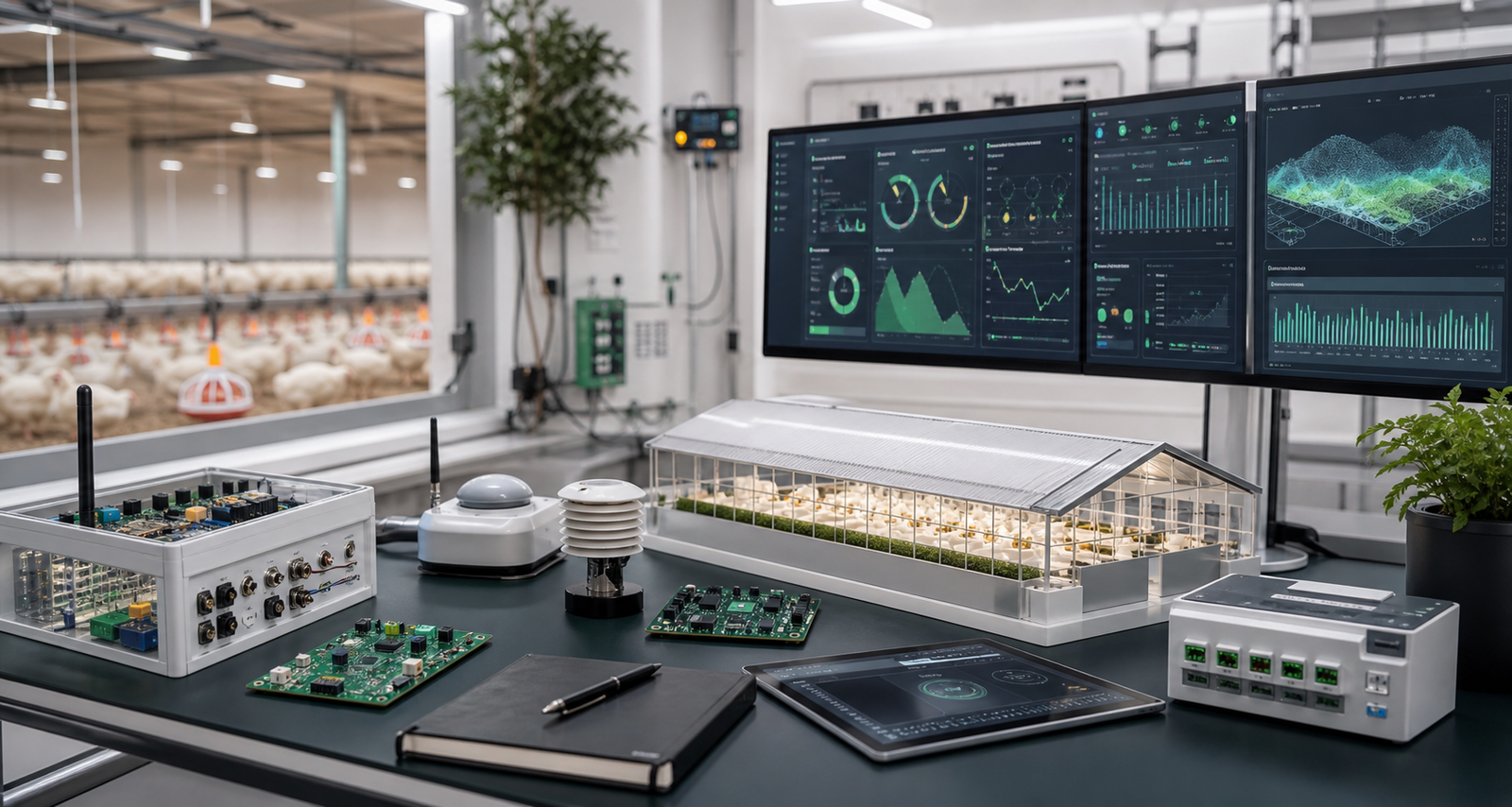
Agricultural automation lab with dashboards and prototype poultry-house model